
Monitoring and analytics
The software watches so a person does not have to
Cameras that only record, rooms checked on a schedule and sites inspected by driving out to them are the same problem wearing different clothes: something happened, and it was found later. Ericom deploys cameras, contactless sensors and field controllers that read their environment as it happens, so an event can be raised while there is still time to act on it, and everything else stays quiet.
Recorded, not watched
Almost all monitoring is retrospective. Footage exists, and it is reviewed after somebody reports that something happened. The overnight check happens on a schedule, and a change in a person's condition does not. A field's lights and irrigation run to a timer set years ago, and the first sign of a fault is a complaint.
The gap is not equipment. Most organisations already own the cameras, most care settings already have staff walking the corridor, and most sites already have controllers in the ground. The gap is that sustained attention on a screen does not hold, and no amount of diligence or rostering changes that; and a timer in the ground has no way to report anything at all. Watching is a poor use of a person and a reasonable use of a sensor.
Retrospective monitoring also settles where the consequence lands: on whoever arrives next, the nurse on the morning round, the officer on the next welfare check, the council officer answering the complaint. The record shows what happened and could not change it.
Where we deploy it
Three environments, three kinds of sensor, one argument.
-
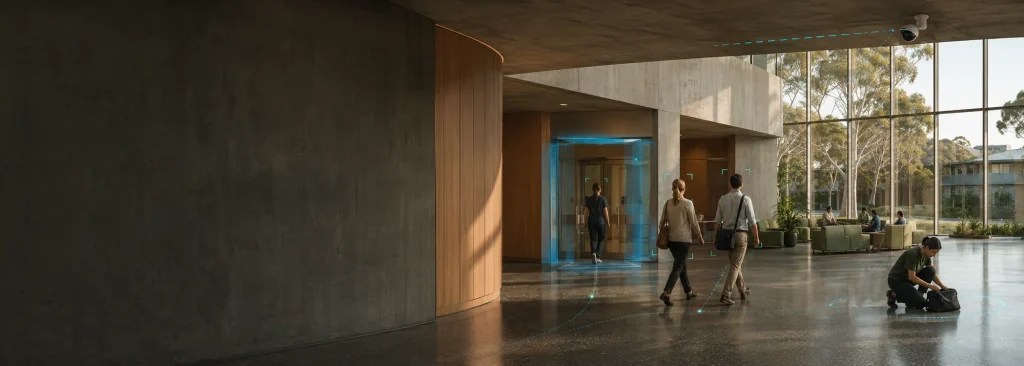 For the cameras you already have
Intelligent Video Analytics
Most organisations own cameras that record and nothing else. Intelligent video analytics reads the footage as it happens: somebody has fallen, a door was forced after hours, four hundred people came through the entrance this morning. Ericom supplies it, integrates it and runs it onshore.
For the cameras you already have
Intelligent Video Analytics
Most organisations own cameras that record and nothing else. Intelligent video analytics reads the footage as it happens: somebody has fallen, a door was forced after hours, four hundred people came through the entrance this morning. Ericom supplies it, integrates it and runs it onshore.
-
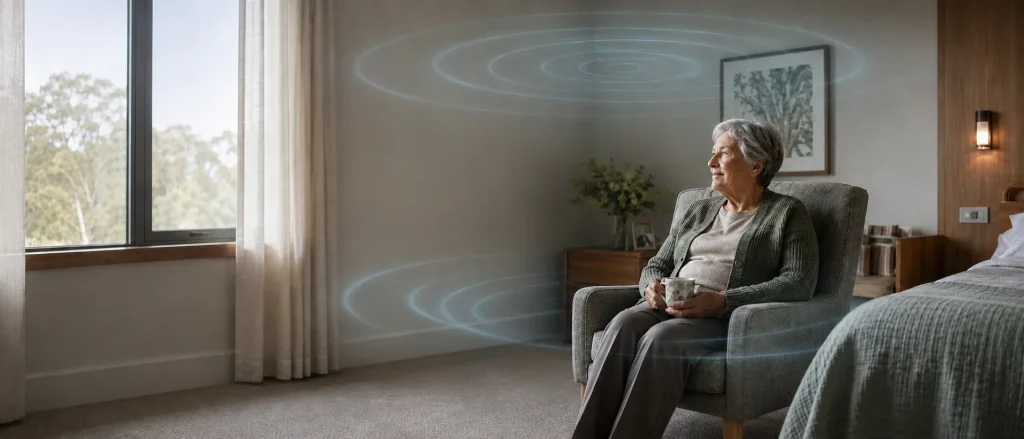 Predictive, not detective
Vital Signs Monitoring
Contactless radar in every room, a personal baseline for every person, and a signal that arrives up to seven days before clinical presentation. Remote monitoring for residential aged care and hospital settings, with deployments in corrections.
Predictive, not detective
Vital Signs Monitoring
Contactless radar in every room, a personal baseline for every person, and a signal that arrives up to seven days before clinical presentation. Remote monitoring for residential aged care and hospital settings, with deployments in corrections.
-
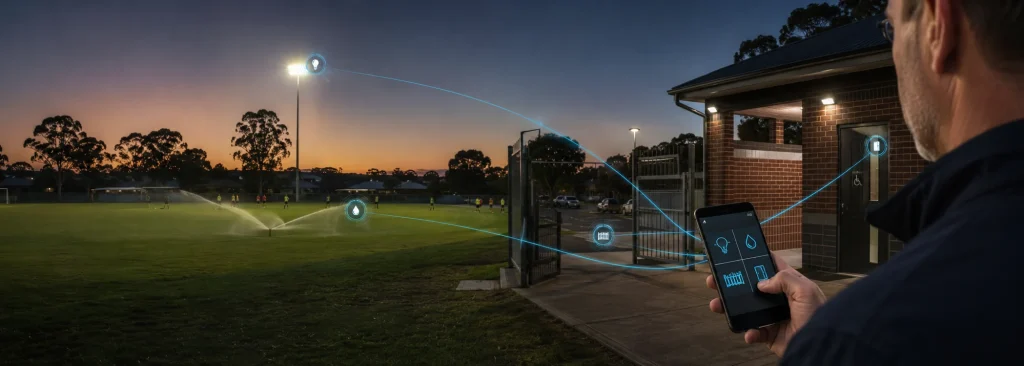 Lights, water, doors, gates and everything else
Grounds and Facilities Management
Floodlights, irrigation, amenity and toilet doors, change rooms, gates, bollards, pumps, metered power outlets, BBQs, HVAC, signage and scoreboards. If it can be switched, locked, dimmed, opened or metered, it can run to a schedule, report what it is doing and raise a work order when it needs attention.
Lights, water, doors, gates and everything else
Grounds and Facilities Management
Floodlights, irrigation, amenity and toilet doors, change rooms, gates, bollards, pumps, metered power outlets, BBQs, HVAC, signage and scoreboards. If it can be switched, locked, dimmed, opened or metered, it can run to a schedule, report what it is doing and raise a work order when it needs attention.
An alert is a promise
Each alert that turns out to be nothing makes the next one easier to ignore. Systems like these are not judged on what they can detect; they are judged on whether the people receiving the alerts still trust them a year in. The alert set is reviewed once the system is running, and a condition that keeps firing for nothing is taken out.
Questions operations teams ask
Short answers first.
Do we need new cameras?
Usually not. Video analytics runs against the streams your existing cameras already produce, and where a camera is positioned badly for the detection you want, we say so during scoping. The other two products use no camera at all: vital signs monitoring is a contactless radar sensor, and grounds and facilities management runs on controllers fitted to assets already in the ground.
Where does the data go?
For video, onshore, and whether it sits on your infrastructure, in cloud or with Ericom is decided at design. For grounds and facilities management, which holds schedules and sensor readings and no imagery, Australian hosting is available where a residency obligation applies. It matters more in this category than in most, because the data is footage of people and, in care settings, information about their bodies. Ericom supplies, integrates and runs all of it from Australia.
Is this surveillance?
It depends on what you configure it to raise, and that is decided with you before it goes live. The vital signs sensing is deliberately contactless and produces no image at all, because in a bedroom a camera is the wrong instrument regardless of what it would detect. Where cameras watch a public space, what is watched, who can see it and how long it is kept are your policy; the deployment is built to it and can show that it was.
Will it catch everything?
No, and a deployment sold as if it would is judged by its first miss. Sensing shortens the time between an event and somebody knowing about it, and creates a point to intervene that a recording or a scheduled round does not. The proof of value is where we establish, on your site, what it raises, what it does not, and how often it fires with nothing behind it.
Prove it in your own environment
Tell us what you find out about too late: the incident found on a recording, the change in a resident's condition found on the morning round, the field lit all night for an empty ground. We scope a proof of value on your cameras, your floor or your site, and come back with the alert conditions in writing and what the proof would need to show before you extended it.
Scope a proof of value